Quick answer: Semaglutide (Wegovy) activates the GLP-1 receptor; tirzepatide (Zepbound) activates both the GIP and GLP-1 receptors. Both brands are FDA-approved prescription drugs for weight management. In the SURMOUNT-5 head-to-head trial, tirzepatide produced a larger average weight change than semaglutide. Compounded versions are not FDA-approved and were not tested in these trials, so the trial numbers do not transfer to them.
If you are comparing the two drugs, this page lays out what the labels and the published trials say, side by side, and where the evidence stops. Some links on this page are affiliate links, which means we may earn a commission if you use them, as explained on our affiliate disclosure page. Nothing here is a recommendation to take either drug.
Two drugs, one family
Semaglutide and tirzepatide are both injectable prescription drugs built from short chains of amino acids. Their labels give molecular weights of 4113.58 (Wegovy) and 4813.53 (Zepbound), and describe semaglutide as a modified GLP-1 and tirzepatide as based on the GIP sequence. For the wider question of how these approved drugs relate to the unapproved "research peptides" sold online, see peptides vs GLP-1 drugs.
Each ingredient is sold under more than one brand, and the labels differ:
- Semaglutide: Wegovy (weight management, and other indications listed below), Ozempic and Rybelsus (type 2 diabetes).
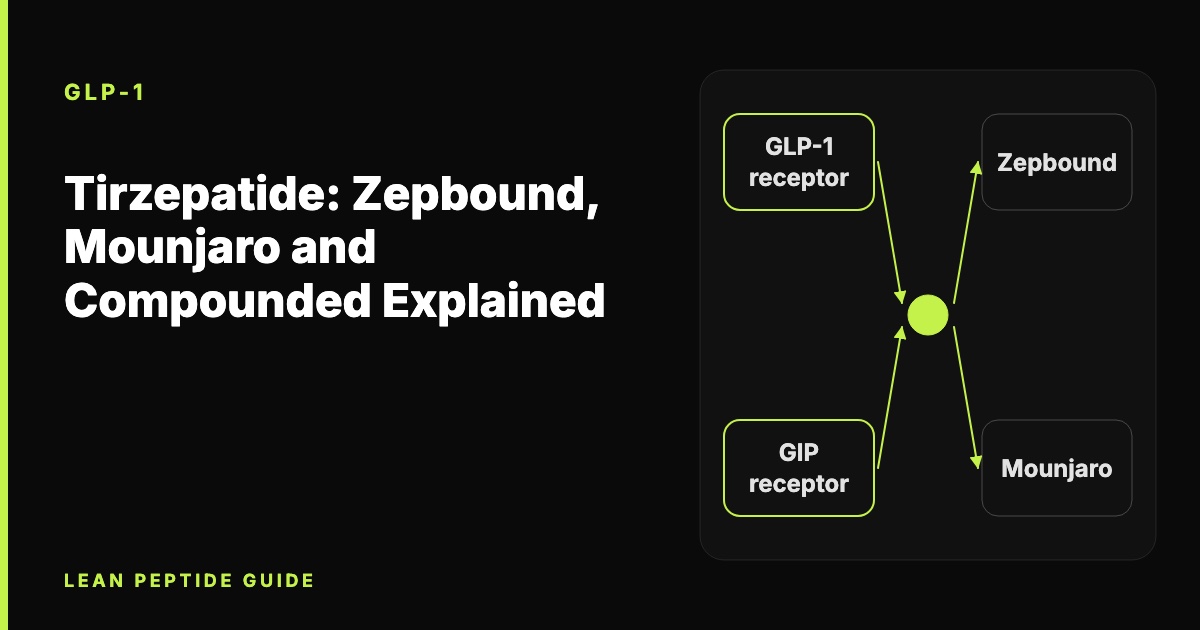
- Tirzepatide: Zepbound (weight management and obstructive sleep apnea) and Mounjaro (type 2 diabetes).
We read the labels on 2026-10-06; labels get revised, so the current version is the final word.
Mechanism: GLP-1 alone, or GLP-1 plus GIP
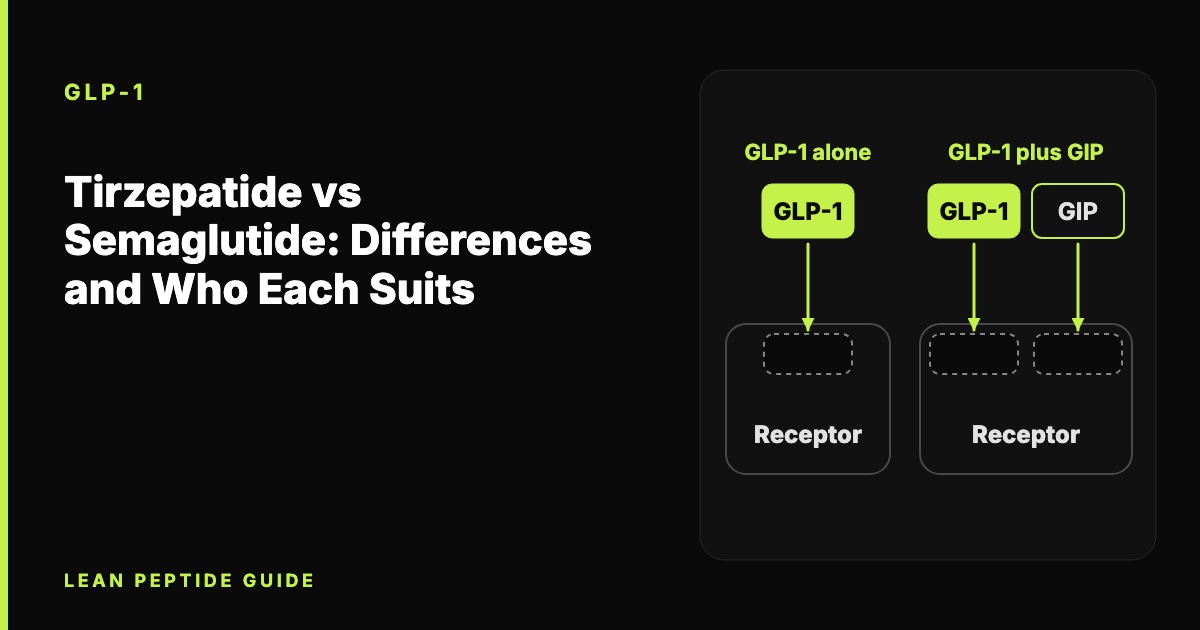
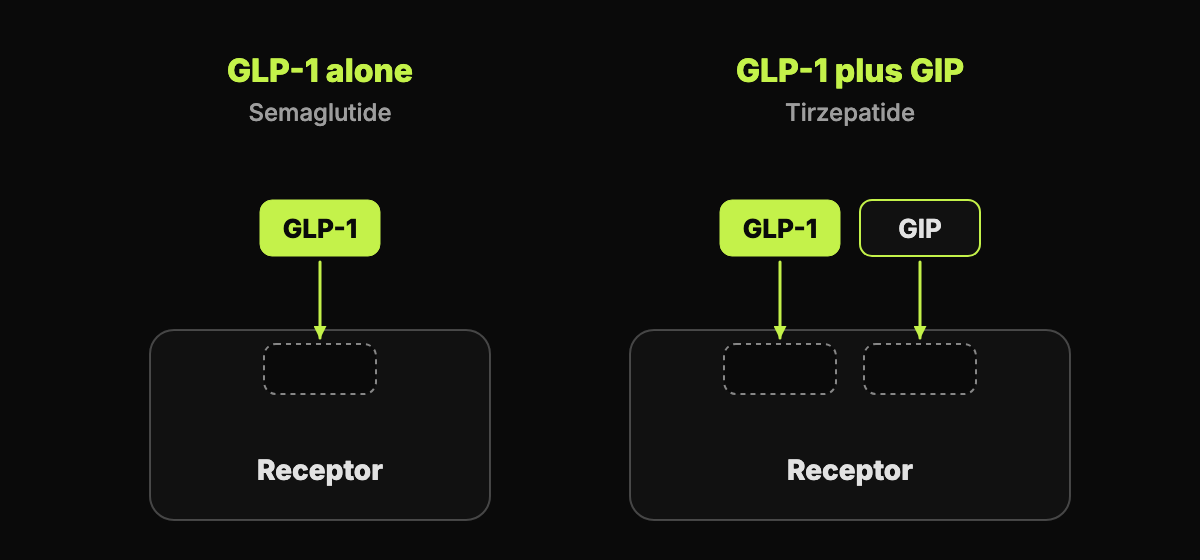
According to the Ozempic label, semaglutide is a GLP-1 receptor agonist that selectively binds and activates the GLP-1 receptor, stimulating glucose-dependent insulin secretion and lowering glucagon. According to the Mounjaro label, tirzepatide is an agonist at both the GIP receptor and the GLP-1 receptor, and it binds and activates both.
That one extra receptor is the headline difference between the two. It is a difference in design, not a verdict: the labels say what each molecule binds, not which one a particular person will tolerate better. That is a question for a prescriber.
What the trials reported for the approved brands
The numbers below come from trials of the FDA-approved brand drugs, given with lifestyle intervention under trial supervision. They are not results for compounded products. Cross-trial comparisons are risky because the populations, durations and designs differ, so we describe each trial on its own terms.
STEP 1 (semaglutide 2.4 mg, the Wegovy dose). Reported by Wilding and colleagues in the New England Journal of Medicine in 2021. The population was 1,961 adults with obesity, or with overweight and a related condition, who did not have diabetes. Two-thirds received semaglutide and one-third placebo, and everyone also had lifestyle support, over 68 weeks. Mean body weight changed by -14.9% with semaglutide against -2.4% with placebo. A weight reduction of 5% or more occurred in 86.4% of the semaglutide group and 31.5% of the placebo group. Nausea and diarrhea were the most common adverse events.
SURMOUNT-1 (tirzepatide, the Zepbound weight trial). Reported by Jastreboff and colleagues in the New England Journal of Medicine in 2022. It enrolled 2,539 adults with the same BMI criteria, without diabetes, split four ways: tirzepatide 5 mg, 10 mg or 15 mg, or placebo, all with lifestyle intervention. It ran 72 weeks, including a 20-week escalation. By week 72 the average change was -15.0% on 5 mg, -19.5% on 10 mg and -20.9% on 15 mg; placebo averaged -3.1%. At the 15 mg dose, 91% of participants reached a reduction of 5% or more.
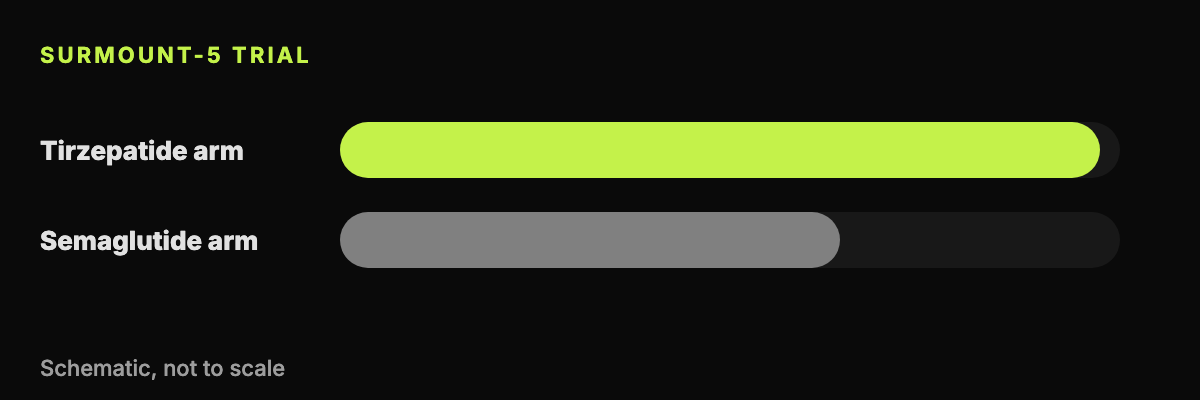
SURMOUNT-5 (head to head). Published in the New England Journal of Medicine in 2025 (volume 393, issue 1, pages 26 to 36). This was a phase 3b, open-label trial of 751 adults with obesity and without type 2 diabetes, randomized to the maximum tolerated dose of tirzepatide or semaglutide given weekly for 72 weeks. The mean weight change was -20.2% with tirzepatide against -13.7% with semaglutide (P<0.001), and waist circumference changed by -18.4 cm against -13.0 cm. The abstract describes gastrointestinal adverse events as mostly mild to moderate and occurring mainly during dose escalation.
Two cautions apply. SURMOUNT-5 was open-label, so participants and investigators knew which drug was given. And all three trials studied adults without type 2 diabetes who also received lifestyle support; results in other groups can differ.
Keep one more fact in view: weight change on any of these drugs is not permanent on its own terms. In the STEP 1 extension, 327 participants regained 11.6 percentage points of their lost weight (SD 7.7) in the year after withdrawal, a net loss of 5.6% from baseline. In SURMOUNT-4 (JAMA 2024), people who switched to placebo after a 36-week lead-in changed by +14.0% from week 36 to 88, while those who continued tirzepatide changed by -5.5%. Those numbers describe stopping approved brand drugs inside trials and say nothing about any particular provider.
Label status and schedules, as the labels print them
Both ingredients have more than one approved product, so "what is it approved for" depends on the brand.
- Wegovy carries weight-reduction approval for adults and for children aged 12 and older with obesity, plus adults who are overweight and have a related condition, always alongside diet and activity. The injection label separately lists a cardiovascular-event indication for adults with established heart disease. The combined Wegovy label, revised 6/2026, adds noncirrhotic MASH with moderate-to-advanced liver fibrosis under accelerated approval. Wegovy tablets (oral semaglutide) were approved by FDA on 2025-12-22, according to Novo Nordisk.
- Zepbound is approved for adults to lower excess body weight and keep it down over the long term, used with a lower-calorie diet and more activity, and for moderate to severe obstructive sleep apnea in adults with obesity.
- Ozempic and Rybelsus are labeled for type 2 diabetes, and Mounjaro is labeled for type 2 diabetes in adults and in children aged 10 and older. We describe their labeled indications rather than ranking them for weight.
Schedules are a prescriber's decision. The approved labels print an escalation plan, and we repeat it here only so you can see how gradual it is. According to the Wegovy injection label, adults start at 0.25 mg once weekly for weeks 1 to 4, then 0.5 mg for weeks 5 to 8, 1 mg for weeks 9 to 12 and 1.7 mg for weeks 13 to 16, with maintenance from week 17 at 1.7 mg or 2.4 mg once weekly. According to the Zepbound label, dosing starts at 2.5 mg once weekly for 4 weeks, then increases in 2.5 mg steps after at least 4 weeks on the current dose, with maintenance of 5 to 15 mg weekly and a maximum of 15 mg weekly. Those are label facts, set and adjusted by a prescriber, and this page is not a guide to injecting.
Side effects the labels list
Both labels report mostly digestive effects, and they are common. In adults, the Wegovy injection label lists nausea at 44%, diarrhea at 30%, vomiting at 24% and constipation at 24% as the most common adverse reactions. The Zepbound label lists nausea, diarrhea, vomiting, constipation, abdominal pain, dyspepsia, injection site reactions, fatigue, hypersensitivity reactions, eructation, hair loss and GERD as common reactions (5% or more). In its trials, the label reports nausea of about 25-29%, diarrhea of 19-23%, vomiting of 8-13% and constipation of 11-17% across doses.
The two labels share most of their named warnings: pancreatitis, gallbladder disease and kidney injury. Each also flags low blood sugar when the drug is combined with insulin or sulfonylureas. The Wegovy label adds monitoring for suicidal behavior and ideation. The Zepbound label adds severe gastrointestinal reactions, fetal harm, and a note that oral contraceptives may work less well because the stomach empties more slowly. The safety guide and each profile cover the label detail. We did not read every warning on every label, so the full list lives in the label itself.
The boxed warning
Both drug families carry a boxed warning. On the Wegovy label it says semaglutide causes thyroid C-cell tumors in rodents at clinically relevant exposures, and that relevance to humans has not been determined. The Zepbound label states the same for tirzepatide in rats. Both labels list as a contraindication a personal or family history of medullary thyroid carcinoma (MTC) or Multiple Endocrine Neoplasia syndrome type 2 (MEN 2). The Wegovy and Ozempic labels also list a known serious hypersensitivity reaction as a contraindication. Compounded products carry no reviewed label, so there is no FDA-reviewed text to check for them.
Compare table
| Semaglutide (Wegovy) | Tirzepatide (Zepbound) | |
|---|---|---|
| Mechanism | GLP-1 receptor agonist | GIP and GLP-1 receptor agonist |
| Label status | FDA-approved brand, weight management and other listed uses | FDA-approved brand, weight management and obstructive sleep apnea |
| Schedule per label | Weekly escalation in 4-week steps; maintenance of 1.7 mg or 2.4 mg weekly for adults | 2.5 mg weekly start, 2.5 mg steps after 4 or more weeks; maintenance 5 to 15 mg weekly |
| Common label side effects | Nausea, diarrhea, vomiting, constipation | Nausea, diarrhea, vomiting, constipation, abdominal pain, injection site reactions |
| Boxed warning | Thyroid C-cell tumors in rodents | Thyroid C-cell tumors in rats |
| Compounded versions | Not FDA-approved, not reviewed for safety, effectiveness or quality | Not FDA-approved, not reviewed for safety, effectiveness or quality |
What is and isn't known about compounded versions
This is where the brand and compounded products part ways, and it is the section to read slowly. Compounded semaglutide and tirzepatide are not FDA-approved. FDA states that it does not review compounded drugs for safety, effectiveness or quality before they are marketed.
What is known. FDA lists both active ingredients as no longer in shortage. For tirzepatide the agency reevaluated and issued a new resolved determination dated 2024-12-19, and for semaglutide it determined the shortage resolved in a decision memo dated 2025-02-21. The enforcement-discretion windows for large-scale copies of the approved drugs ended on 2025-02-18 (tirzepatide, 503A pharmacies) and 2025-04-22 (semaglutide, 503A). FDA also reported adverse events linked to compounded products: as of 2026-05-31, 990 reports for compounded semaglutide and over 730 for compounded tirzepatide, along with dosing errors from vial and unit confusion. The details live on the compounded GLP-1s page.
What is not known. The trials above did not test compounded products, so no trial figure applies to them. We found no head-to-head trial comparing a compounded product with the brand. FDA says semaglutide salt forms such as sodium and acetate are not approved and that it lacks evidence of equivalence for them. Strength, purity and sterility vary by pharmacy and are not verified by FDA in advance, and any claim that a compounded product matches a brand is a claim, not a finding.
If a provider offers a compounded version, ask which pharmacy fills it and how the product is made. Whoosh Wellness, the telehealth partner we cover in our Whoosh Wellness review, states that its medications are made by licensed 503A or 503B pharmacies and that each batch is third-party tested. It lists compounded tirzepatide and compounded semaglutide among its products, both not FDA-approved. We report that as stated by Whoosh and do not make any claim about outcomes.
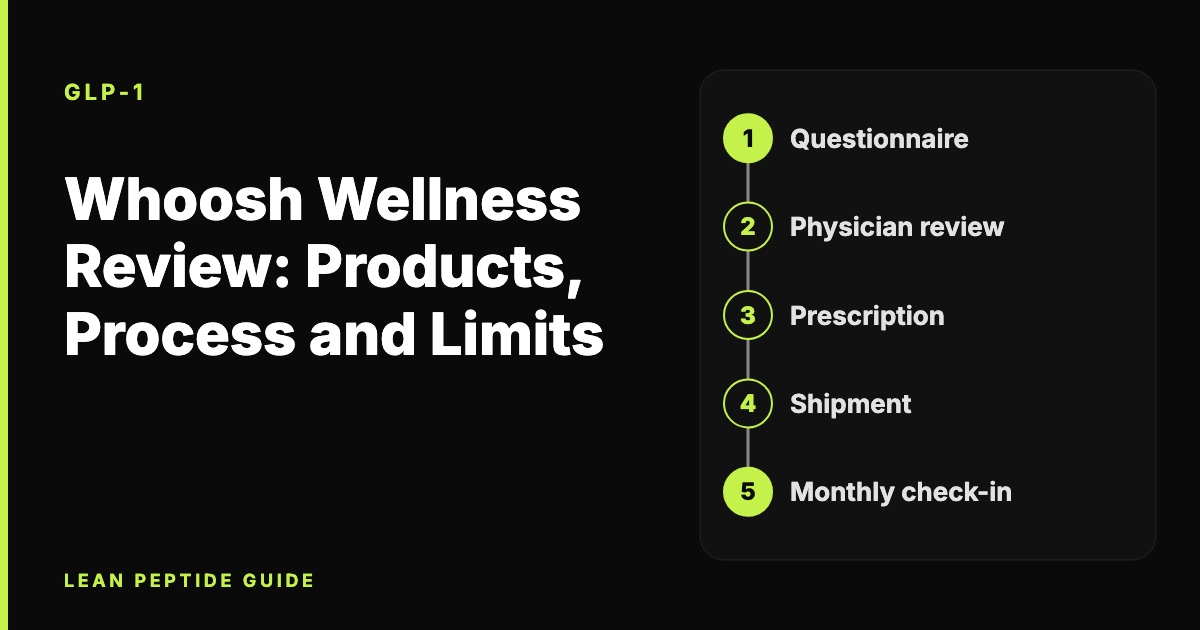
For anyone 18 or older in a state Whoosh serves, the intake is a questionnaire, and a licensed physician decides whether a prescription is appropriate. Whoosh states that completing the intake does not guarantee a prescription.
Who each drug may suit, according to the labels
We cannot tell you which drug suits you, and neither can a table. What we can do is point to what the labels say about who each is approved for:
- Wegovy and Zepbound are both approved with diet and physical activity for adults with obesity, or with overweight and a weight-related condition.
- Wegovy is also approved for children aged 12 and older with obesity, and it carries a cardiovascular indication in adults with established cardiovascular disease and obesity or overweight.
- Zepbound is the one of the two with an obstructive sleep apnea indication, for moderate to severe cases in adults with obesity.
- Neither brand label is a good fit for anyone with a personal or family history of MTC or MEN 2, because both list those as contraindications.
- Zepbound's label lists reduced oral contraceptive effectiveness, and tirzepatide labels say to stop the drug if pregnancy is recognized, so anyone who is or may become pregnant should raise it with a prescriber.
Beyond that, the choice rests on medical history, other medicines, past digestive side effects, cost, coverage and availability. A prescriber weighs those.
Questions to bring to a prescriber
Which approved brand is proposed, and for which labeled use? What is the plan for stopping, given the regain figures above? If a compounded version is on the table, which pharmacy makes it? For another angle, see keeping muscle during weight loss and are peptides safe.
Sources
- Wegovy injection label, DailyMed read 2026-10-06
- Wegovy injection and tablets combined label, DailyMed read 2026-10-06
- Zepbound prescribing information, Lilly read 2026-10-06
- Zepbound FDA label PDF read 2026-10-06
- Mounjaro prescribing information, Lilly read 2026-10-06
- Ozempic label, DailyMed read 2026-10-06
- Novo Nordisk: Wegovy tablet approval announcement read 2026-10-06
- STEP 1 abstract (PMID 33567185), NCBI read 2026-10-06
- SURMOUNT-1 abstract (PMID 35658024), NCBI read 2026-10-06
- SURMOUNT-5 record (PMID 40353578), Europe PMC read 2026-10-06
- STEP 1 extension and SURMOUNT-4 abstracts, NCBI read 2026-10-06
- FDA: concerns with unapproved GLP-1 drugs used for weight loss read 2026-10-06
- FDA: tirzepatide shortage determination memo read 2026-10-06
- FDA: semaglutide shortage determination memo read 2026-10-06
- FDA: policies for compounders as GLP-1 supply stabilizes read 2026-10-06
- Whoosh Wellness terms and conditions read 2026-10-06
FAQ
Is tirzepatide stronger than semaglutide?
In the SURMOUNT-5 head-to-head trial of the approved brands, the mean weight change was -20.2% with tirzepatide and -13.7% with semaglutide over 72 weeks in 751 adults with obesity and without type 2 diabetes. That trial was open-label and used each person's maximum tolerated dose. It describes a group average, not what any one person will see.
Which has fewer side effects?
The labels list similar digestive effects for both. SURMOUNT-5 reported that gastrointestinal events were mostly mild to moderate and occurred mainly during escalation.
Are Wegovy and Ozempic the same drug?
They share the active ingredient, semaglutide, but they are separate products with separate labels. Ozempic's labeled uses are for type 2 diabetes, and Wegovy's include weight management. The same is true of Mounjaro and Zepbound, which both contain tirzepatide.
Do the trial results apply to compounded semaglutide or tirzepatide?
No. The trials tested the approved brands as labeled. Compounded versions are not FDA-approved, and FDA does not review them for safety, effectiveness or quality before marketing. We found no trial that tested a compounded product against a brand.
Can I combine tirzepatide and semaglutide?
Per its label, Zepbound is not meant to be combined with other tirzepatide products or with other GLP-1 receptor agonists. Medicine decisions belong with a prescriber, not an article.
What does the boxed warning mean in plain terms?
Both labels state that the drug caused thyroid C-cell tumors in rodents, and that it is not known whether this happens in humans. Both contraindicate use with a personal or family history of medullary thyroid carcinoma or MEN 2. A prescriber reviews that history before any prescription.
Will I regain weight if I stop?
In the STEP 1 extension, participants regained 11.6 percentage points of the weight they had lost in the year after withdrawal. SURMOUNT-4 reported a similar direction after switching to placebo. The plan for stopping is something to discuss with a prescriber before starting.
Not medical advice. See the medical disclaimer.