Quick answer: Sermorelin is a growth hormone-releasing hormone analog. Its only FDA approvals were for the brand product Geref, which was used as a diagnostic test and in children with growth failure, and which was discontinued in 2008. Compounded sermorelin is not FDA-approved. Small, short studies in adults are thin, and no large trial shows meaningful weight loss or muscle gain in healthy adults.
- Type
Growth hormone-releasing hormone (GHRH) analog
- Form
Injection or tablets, as stated by Whoosh; forms vary
- FDA status
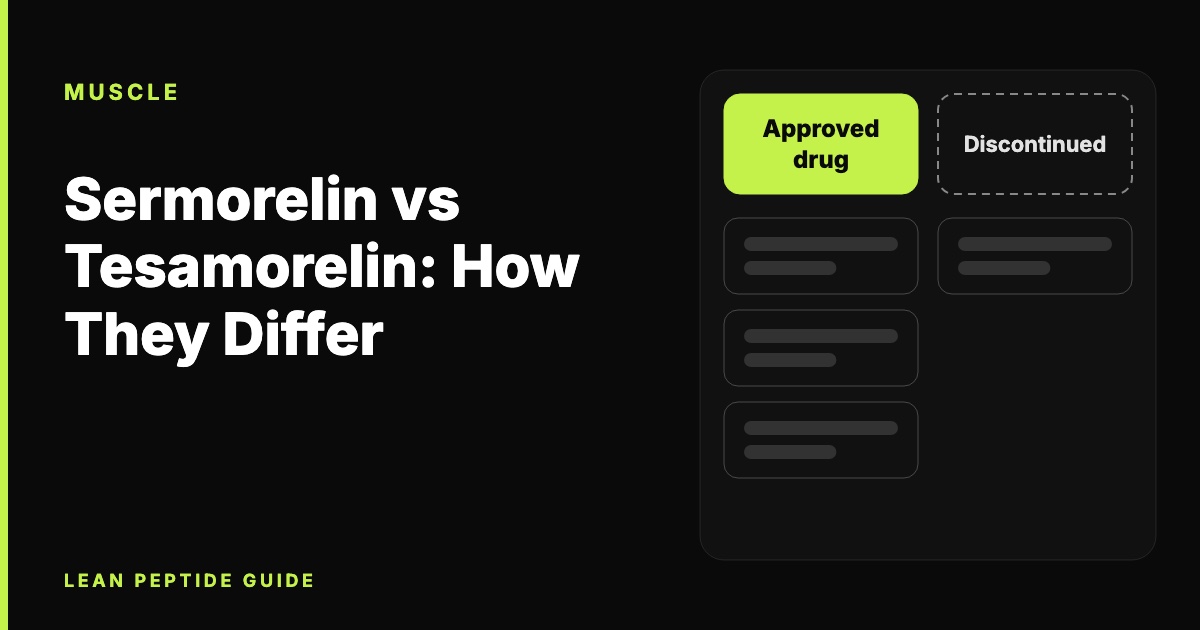
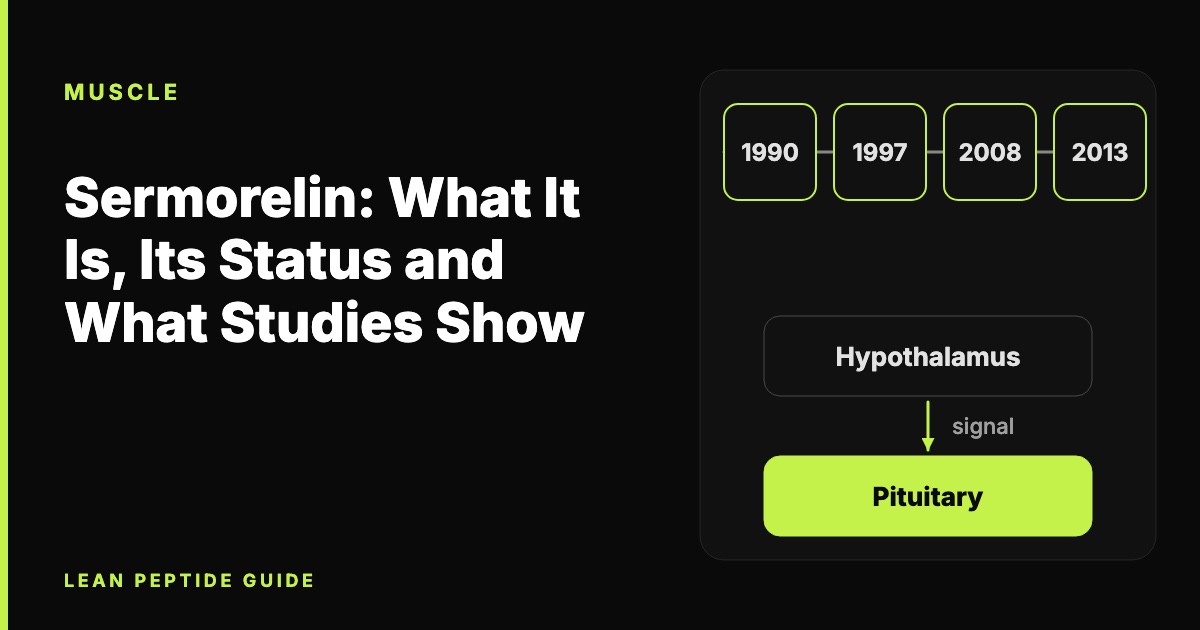
Geref: diagnostic approval 1990, pediatric approval 1997, discontinued 2008; FDA's 2013 notice said it was "not withdrawn for reasons of safety or effectiveness." Compounded use is not FDA-approved.
- Whoosh offers it
Yes, as stated by Whoosh
Overview
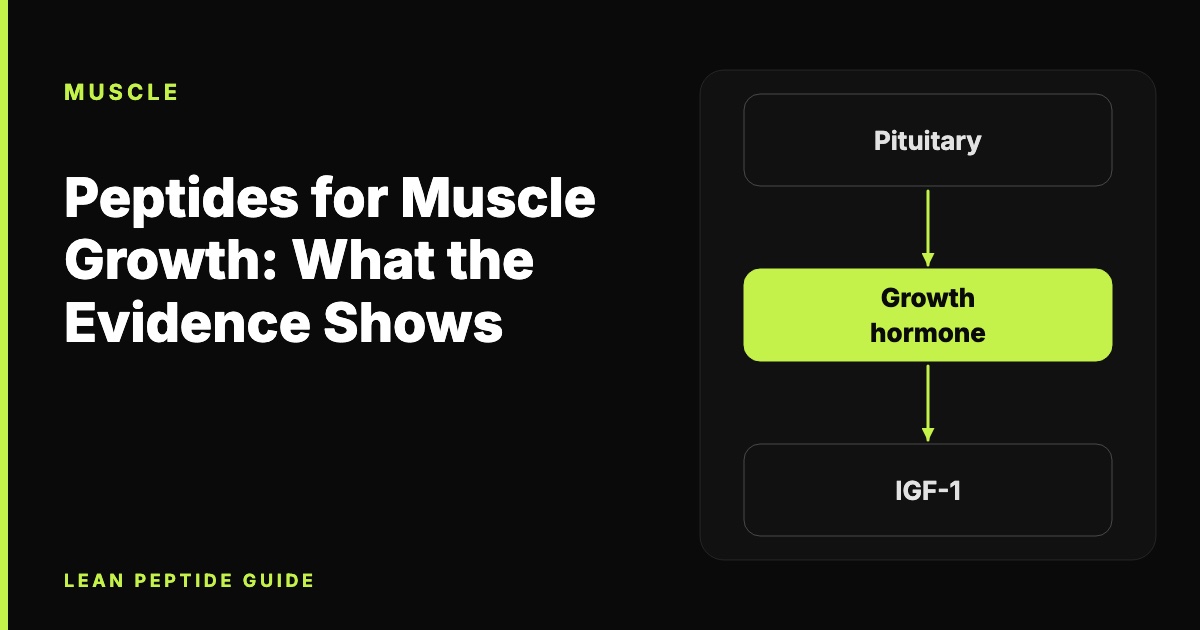
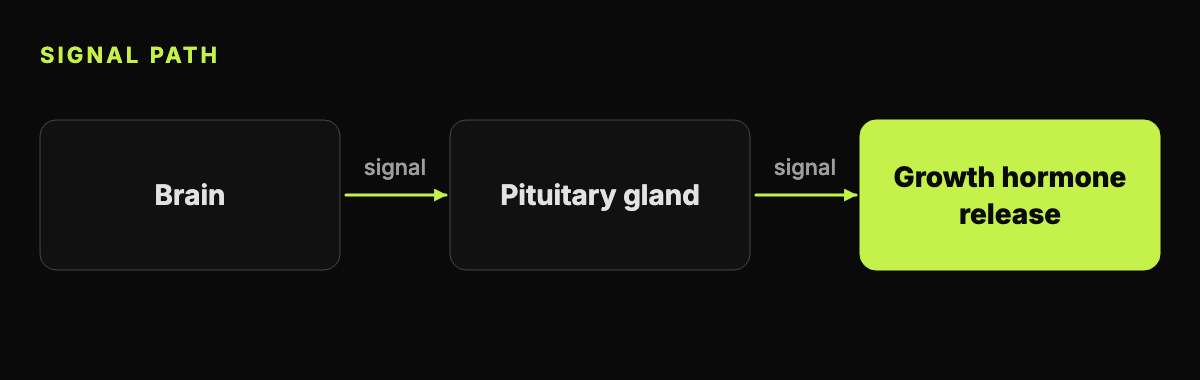
Your pituitary gland releases growth hormone (GH) in pulses. A hormone made higher up in the brain, called GHRH, helps trigger that release. Sermorelin is a lab-made relative of GHRH, so it acts through the same receptor on the pituitary. That separates it from ipamorelin, which works through a different (ghrelin) receptor. Our comparison with ipamorelin walks through the difference.
People search for sermorelin because it sits in the space between a hormone and a "wellness peptide," and because sellers describe it in muscle and weight terms. This page sticks to what regulators and published studies say. For the wider picture, see our overview of peptides for muscle growth.
Status
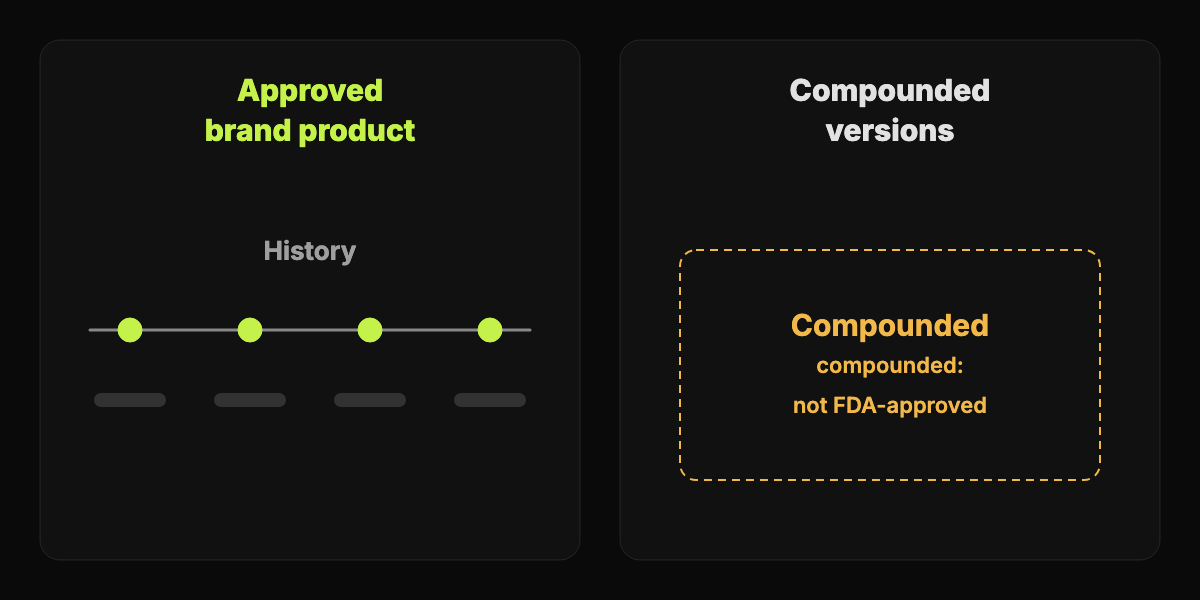
The history is short and specific. According to a Federal Register notice on govinfo, the brand product Geref (sermorelin acetate) came in two forms:
- A 0.05 mg ampule, approved 1990-12-28, used to evaluate how well the pituitary can secrete GH.
- Vials of 0.5 mg and 1.0 mg, approved 1997-09-26, for idiopathic growth hormone deficiency in children with growth failure.
The manufacturer told FDA it was discontinuing the ampule on 2008-07-11 and the vials on 2008-12-02. The withdrawal of the approvals took effect 2009-06-18. In its 2013 notice, FDA stated that the Geref products "were not withdrawn for reasons of safety or effectiveness." That is a regulatory finding that lets other companies reference the old applications. It is not an endorsement, and it does not approve any current product.
A December 2024 FDA advisory committee briefing (dated 2024-12-04) adds two points. Sermorelin is the only growth hormone secretagogue ever approved, for short stature in children who responded to a Geref stimulation test. And no secretagogue is approved for growth hormone deficiency in adults.
Compounded sermorelin is not FDA-approved. FDA's 503A bulk drug substances lists (the version updated 2026-05-14) do not place sermorelin in Category 1, 2 or 3. We could not establish why, so we draw no conclusion from the absence. FDA's page on compounding safety risks also does not name sermorelin. The anti-doping agency USADA states that sermorelin is prohibited in sport.
Evidence
The honest summary is that the evidence is thin. A 2020 review of growth hormone secretagogues (Sinha and colleagues, on PubMed Central) calls the clinical data "a paucity," made up of small, short studies, mostly in healthy or experimentally hypogonadal men. Two sermorelin studies it describes:
- Khorram 1997, 16 weeks: lean mass increased, but body weight and fat mass did not change.
- Vittone 1997, 6 weeks: no significant change in weight, BMI, waist-hip ratio, lean mass or percent fat.
The review page did not give the number of participants in either study, so we cannot say how large they were. Lean mass on a scan also includes water and organs, so it is not the same as muscle.
An FDA briefing notes that in adults with diagnosed growth hormone deficiency, GH therapy improves body composition, including muscle mass. That finding concerns a diagnosed deficiency, not healthy adults, and not sermorelin. Federal law (21 USC 333(e)(1), as cited in that briefing) bars knowingly distributing human growth hormone for any use other than a disease or condition authorized by HHS.
What we can say: sermorelin was approved for narrow medical uses, it has a long history, and studies of it for body composition in healthy adults are small and short. What we cannot say: that it produces weight loss or muscle gain. If you want to know what does build muscle, our guide to muscle-building evidence covers training and protein, and our sermorelin explainer goes deeper into what can and cannot be claimed.
Side effects
We did not open the Geref label itself, so there is no label list here. A review in the journal BioDrugs of Geref use in children reported that transient facial flushing and pain at the injection site were the most common effects, and described the drug as well tolerated. That is evidence from children given the brand product under supervision. It does not describe adults taking compounded products, and it does not rule out other risks.
Because compounded products are not reviewed by FDA for safety, effectiveness or quality before marketing, ask any prescriber how a product is made and which pharmacy fills it. Our safety overview explains the difference between approved, compounded and "research use only" products.
Access
Sermorelin is a prescription product. Whoosh Wellness, a telehealth company, states that it offers sermorelin as an injection or as tablets (read 2026-10-06). We describe its offering, not its results, and its pages carry marketing language that we do not count as evidence. This page contains an affiliate link to Whoosh, which pays us if a reader becomes a customer. Completing an intake does not guarantee a prescription.
Here a licensed physician decides what is appropriate, and nothing is promised. Our Whoosh Wellness review lists what the company says it does and does not offer.
Sources
- Federal Register notice on Geref (sermorelin acetate), via govinfo read 2026-10-06
- FDA advisory committee briefing, growth hormone secretagogues (2024-12-04) read 2026-10-06
- FDA 503A bulk drug substances categories list, updated 2026-05-14 read 2026-10-06
- FDA: bulk drug substances that may present significant safety risks read 2026-10-06
- Sinha et al., review of growth hormone secretagogues (PMC7108996) read 2026-10-06
- BioDrugs review of Geref in children (PubMed record 18031173) read 2026-10-06
- USADA: what athletes should know about sermorelin read 2026-10-06
- Whoosh Wellness: peptide therapy page, as stated by Whoosh read 2026-10-06
FAQ
Is sermorelin FDA-approved?
Not today. The brand product Geref held approvals for a diagnostic test and for children with growth failure, and it was discontinued in 2008. Compounded sermorelin is not FDA-approved.
Was sermorelin taken off the market because it was unsafe?
The 2013 notice answers a narrow question about why the old brand left the market. It says nothing about whether a current product is safe or works for a given goal.
Does sermorelin cause weight loss or muscle gain?
Small, short studies reported mixed body composition results, and a review called the data a paucity. No large trial in healthy adults shows meaningful weight loss or muscle gain.
Can athletes use sermorelin?
USADA states that sermorelin is prohibited in sport. Anyone subject to testing should check the current prohibited list before considering it.
Does Whoosh sell sermorelin?
Yes, according to Whoosh, which states it offers sermorelin as an injection or tablets. It does not offer ipamorelin, tesamorelin or CJC-1295.
Not medical advice. See the medical disclaimer.