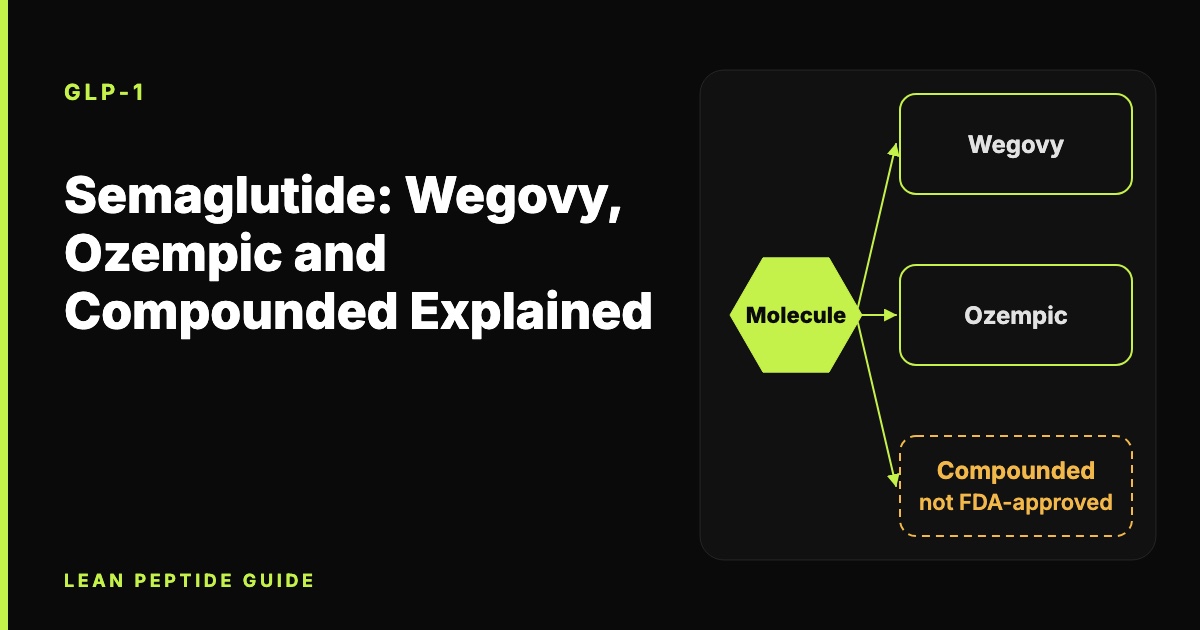
Quick answer: Semaglutide is a GLP-1 receptor agonist sold under FDA-approved brand names: Wegovy for weight management, and Ozempic and Rybelsus for type 2 diabetes. Trial results belong to those approved products. Compounded semaglutide is not FDA-approved, and FDA says it does not review such drugs for safety, effectiveness or quality. A licensed physician decides whether any prescription is appropriate.
- Type
GLP-1 receptor agonist
- Form
Once-weekly injection (Wegovy, Ozempic); once-daily tablet (Wegovy tablets, Rybelsus)
- FDA status
Wegovy, Ozempic, Rybelsus and Wegovy tablets are approved; compounded versions are not FDA-approved
- Whoosh offers it
Yes, compounded, as stated by Whoosh
Overview
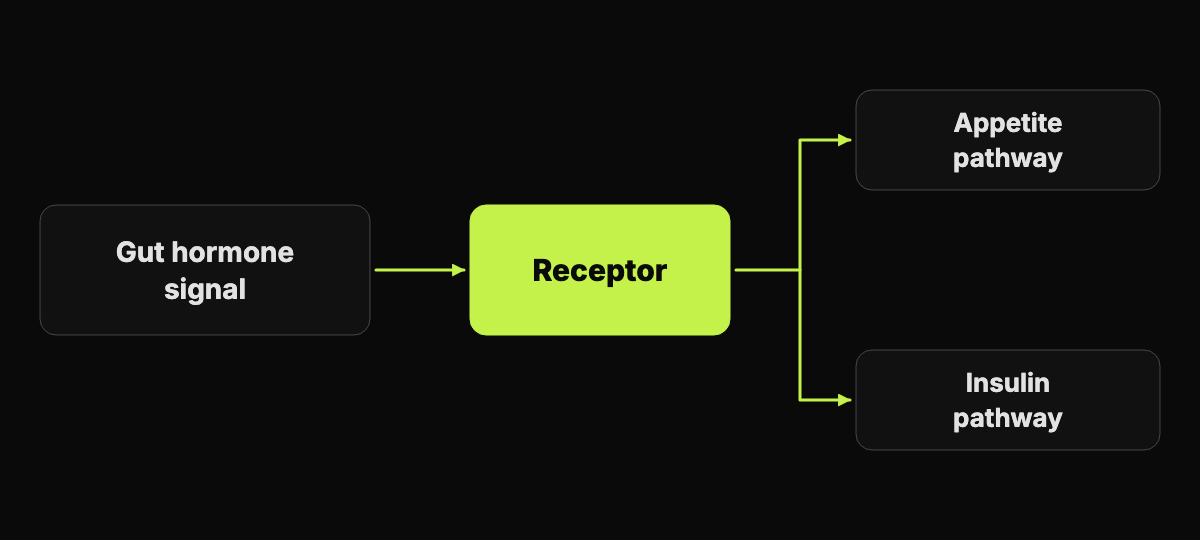
Semaglutide copies the action of GLP-1, a gut hormone that rises after eating. According to the Ozempic label, it selectively binds and activates the GLP-1 receptor, which stimulates insulin release that depends on blood sugar and lowers glucagon. The Wegovy label gives its molecular weight as 4113.58 g/mol and describes modifications to the natural GLP-1 sequence. Our guide to the peptide vocabulary explains why a GLP-1 drug counts as a peptide and why that word also covers unapproved products FDA warns about.
Status
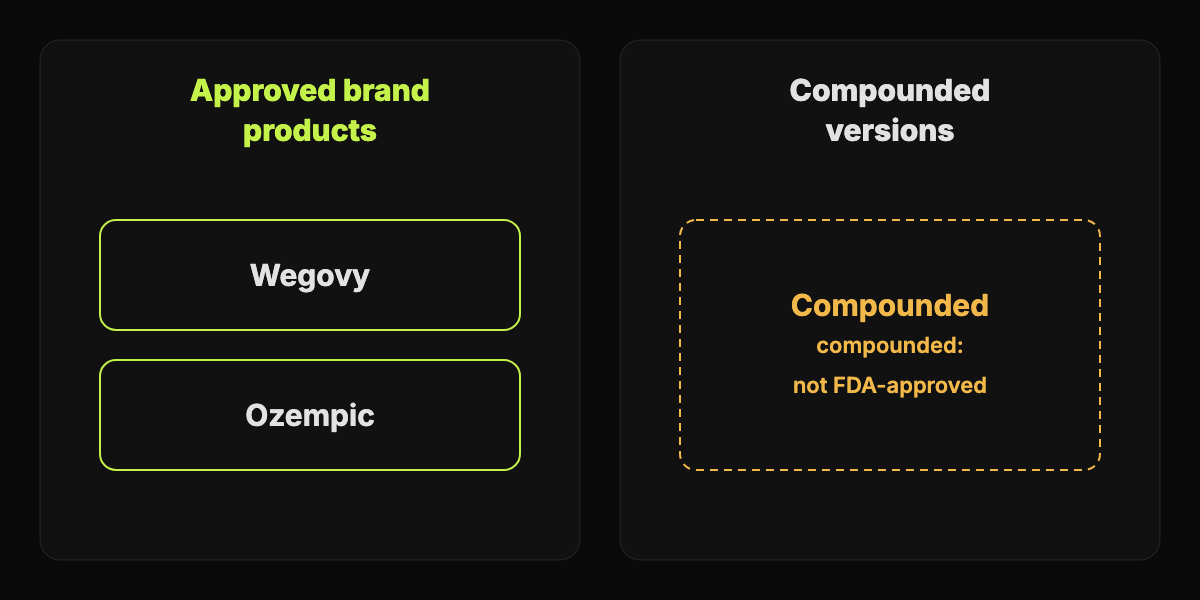
Several approved products contain semaglutide, and they are not interchangeable:
- Wegovy injection. The label states it is for weight reduction, with diet and physical activity, in adults and in children 12 and older with obesity, and in adults with overweight plus at least one weight-related condition. It also carries an indication to reduce major adverse cardiovascular events in adults with established cardiovascular disease and obesity or overweight.
- Wegovy label, revised June 2026. The combined injection and tablet label lists a further indication for noncirrhotic MASH with moderate to advanced liver fibrosis, granted under accelerated approval.
- Wegovy tablets. Novo Nordisk states FDA approved them on 2025-12-22, as the first oral GLP-1 for weight management.
- Ozempic. Labeled indications are in type 2 diabetes: blood sugar control with diet and exercise, a reduction in major cardiovascular events for people with established heart disease, and a lower risk of kidney function decline for people with chronic kidney disease.
- Rybelsus. The oral version, labeled for type 2 diabetes blood sugar control and for reducing major cardiovascular events in adults at high cardiovascular risk.
We print no dose schedules. Each approved label has its own, and a prescriber sets it.
Compounded semaglutide is a different thing. It is not FDA-approved. FDA's page on unapproved GLP-1 drugs says these versions are not reviewed for safety, effectiveness or quality, and that salt forms of semaglutide lack evidence of equivalence. FDA's decision memo dated 2025-02-21 determined that the semaglutide shortage was resolved. Read our explainer on compounded GLP-1s for how compounding works and where FDA's limits are.
Evidence
The main trial of the approved drug is STEP 1 (Wilding and colleagues, New England Journal of Medicine, 2021). It enrolled 1,961 adults with a BMI of 30 or more, or 27 or more with a weight-related condition, and no diabetes. Participants received Wegovy at 2.4 mg or placebo in a 2-to-1 split, both alongside lifestyle intervention, for 68 weeks.
- Mean body weight change was -14.9 percent with semaglutide against -2.4 percent with placebo.
- Loss of at least 5 percent of body weight occurred in 86.4 percent of the semaglutide group and 31.5 percent of the placebo group.
- Nausea and diarrhea were the most common adverse events.
A STEP 1 substudy used scans in 140 participants. It reported total lean mass down 9.7 percent, while the share of body weight made up of lean mass rose by 3.0 percentage points. Lean mass on a scan is not the same as muscle. Our page on lean mass and GLP-1s covers this in detail.
A STEP 1 extension followed 327 participants for a year after stopping. They regained 11.6 percentage points of the lost weight on average, and the heart and metabolic improvements moved back toward baseline.
These are results for the branded drug, used as labeled under trial supervision. They do not tell us what a compounded product does.
Side effects
The Wegovy injection label carries a boxed warning: in rodents, semaglutide causes thyroid C-cell tumors at clinically relevant exposures, and whether this applies to people has not been determined. It is contraindicated with a personal or family history of medullary thyroid carcinoma or Multiple Endocrine Neoplasia syndrome type 2, and with known serious hypersensitivity to semaglutide or its ingredients.
The label names these warnings and precautions: acute pancreatitis, gallbladder disease, low blood sugar when used with insulin or sulfonylureas, acute kidney injury, and suicidal behavior and ideation. The label has further warnings that we did not review in full, so ask a prescriber for the complete list.
The most common adverse reactions in adults on the Wegovy injection label were nausea (44 percent), diarrhea (30 percent), vomiting (24 percent) and constipation (24 percent). For Wegovy tablets, the label lists nausea, diarrhea, vomiting, constipation, abdominal pain, headache and fatigue.
As of 2026-05-31, FDA reported 990 adverse event reports for compounded semaglutide. Our overview of peptide safety sets out the risks by source.
Access
Brand-name semaglutide is a prescription medicine, available through a prescriber and, for some people, through insurance. Whoosh Wellness states that it offers compounded semaglutide as a microdose or full-dose injection (read 2026-10-06). The Whoosh button below is an affiliate link: a purchase through it may earn this site a commission.
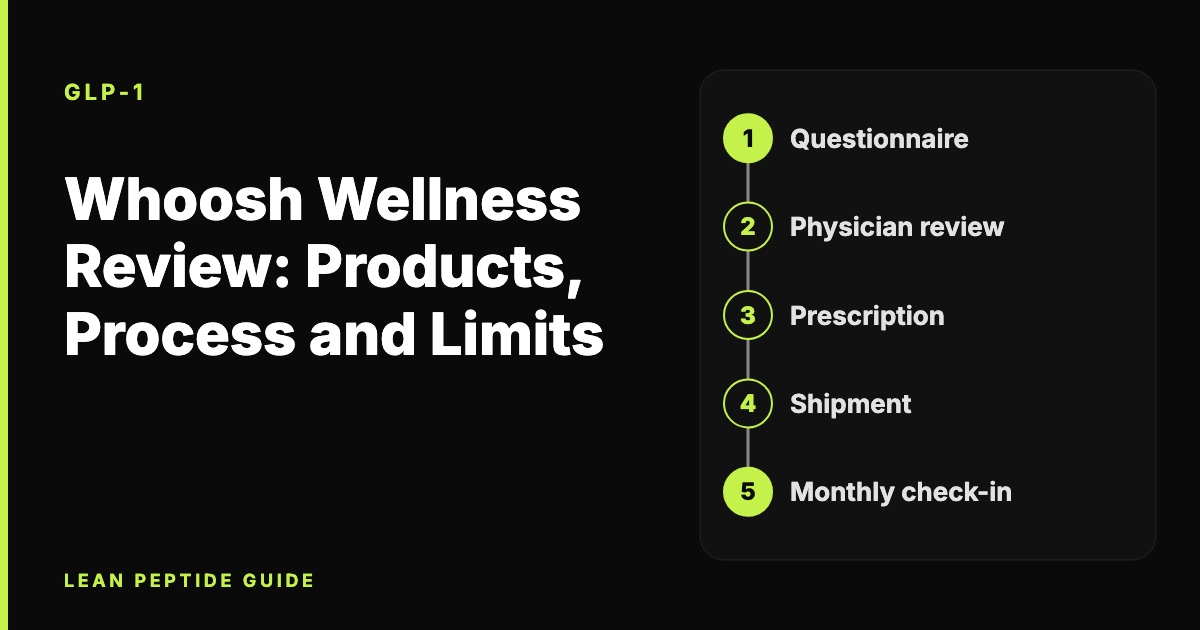
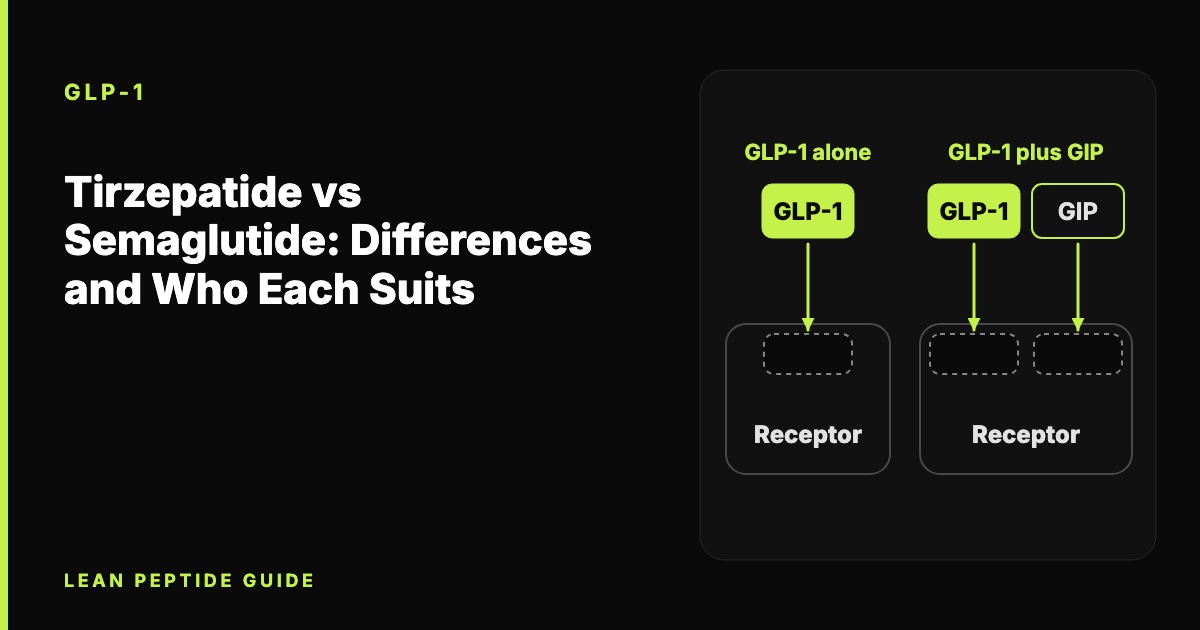
Under Whoosh's model, a licensed physician decides whether a prescription is appropriate, and Whoosh says an intake does not ensure one. Our Whoosh Wellness review covers the process, and our semaglutide and tirzepatide comparison sets the two drugs side by side.
Sources
- Wegovy injection label, DailyMed read 2026-10-06
- Wegovy injection and tablet label, DailyMed read 2026-10-06
- Ozempic label, DailyMed read 2026-10-06
- Rybelsus label, DailyMed read 2026-10-06
- Novo Nordisk announcement of Wegovy tablets read 2026-10-06
- STEP 1 abstract (PubMed 33567185) read 2026-10-06
- FDA: concerns with unapproved GLP-1 drugs used for weight loss read 2026-10-06
- FDA decision memo on the semaglutide shortage (2025-02-21) read 2026-10-06
- Whoosh Wellness: peptide therapy page, as stated by Whoosh read 2026-10-06
FAQ
What is the difference between Wegovy and Ozempic?
Both contain semaglutide. Ozempic's labeled indications are in type 2 diabetes, and Wegovy's are weight reduction and cardiovascular risk reduction in adults with obesity or overweight. A prescriber chooses between them.
Is compounded semaglutide the same as Wegovy?
No evidence says so. Compounded semaglutide is not FDA-approved, and FDA says it is not reviewed for safety, effectiveness or quality. Trial results belong to the approved brand.
What are the main label warnings?
A boxed warning on thyroid C-cell tumors seen in rodents, plus warnings that include pancreatitis, gallbladder disease and kidney injury. The label is the place to read the full list.
What happens if someone stops taking it?
In the STEP 1 extension, participants regained part of the weight in the year after stopping. Talk with a prescriber before changing anything.
Not medical advice. See the medical disclaimer.