Quick answer: You cannot legally buy the FDA-approved weight-loss peptide drugs, Wegovy and Zepbound, without a prescription. Vials sold as "research use only" are unapproved, and FDA has said the label does not change that. We found no FDA statement approving any over-the-counter peptide supplement for weight loss. The lawful routes run through a licensed prescriber, whether at a clinic, a manufacturer program or a telehealth service.
Plenty of searchers want weight loss peptides online and fast, and a large number of websites will happily sell something. This page explains which products are lawful, which ones draw FDA enforcement, and what a legitimate route involves. We cite FDA pages, labels and manufacturer statements, with the date we read each one.
The honest answer on approved drugs
The two approved weight-management peptides are prescription medicines. Novo Nordisk's NovoCare page describes Wegovy as a prescription medicine, and wegovy.com says the same. Lilly's Zepbound page states "Prescription required" and describes it as a prescription medicine for adults with obesity, or overweight with related conditions, and for moderate to severe obstructive sleep apnea in adults with obesity.
So a site offering real Wegovy or Zepbound to anyone who clicks "add to cart" is not describing a lawful sale. The word "peptide" does not create a loophole. Semaglutide and tirzepatide are peptides, and they are exactly the products FDA regulates as prescription drugs; see peptides vs GLP-1 for the terminology.
What FDA says about unapproved GLP-1 products
FDA keeps a page on its concerns with unapproved GLP-1 drugs used for weight loss, current as of 2026-10-01. Its main points, in our words:
- Compounded drugs are not FDA-approved, and nobody at FDA checks their safety, effectiveness or quality before they reach the market.
- Counterfeit Ozempic has turned up in the US supply, and some pharmacies have used false credentials.
- Some products are falsely labeled "for research purposes" or "not for human consumption" while being sold with human dosing instructions.
- Retatrutide and cagrilintide cannot lawfully be compounded, and semaglutide salt forms (sodium, acetate) are not approved.
- Red flags include prices that look too good to be true, damaged packaging and no oversight by a licensed physician.
The page counts adverse event reports through 2026-05-31: 990 for compounded semaglutide and more than 730 for compounded tirzepatide. A report is not proof of cause, but FDA lists patient self-dosing mistakes and provider miscalculation among the events.
"Research use only" vials
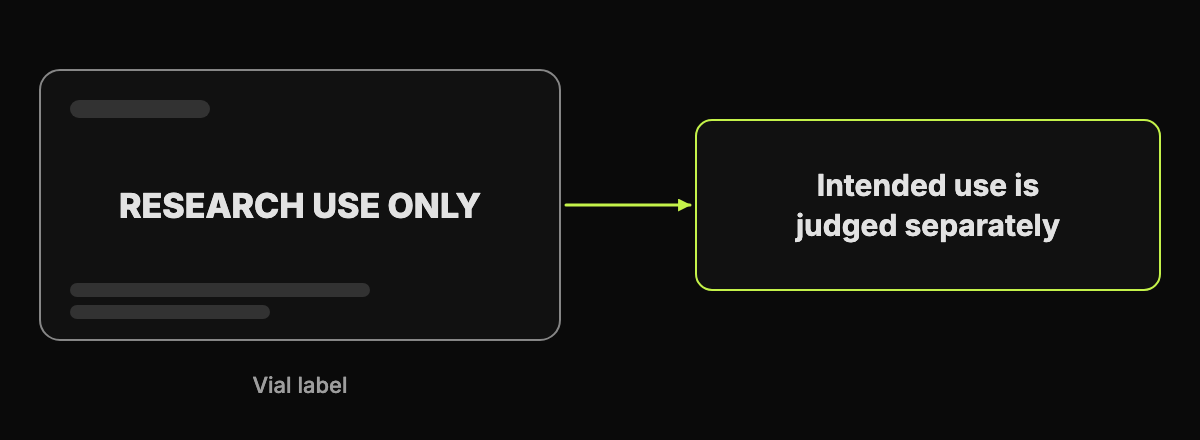
A vial labeled "research use only" or "not for human consumption" sounds like a technical safeguard. In FDA's reading it is a label, and the agency looks at how the product is marketed.
- In a warning letter dated 2026-03-31, FDA told a peptide seller that the "research use only" wording did not alter the products' human-drug purpose, which made them unapproved new drugs. The seller was Gram Peptides.
- A letter dated 2024-12-10 to Summit Research Peptides covered products including semaglutide, retatrutide, cagrilintide, tirzepatide and mazdutide, and concluded that weight-loss marketing showed human drug intent.
- A letter dated 2026-08-24 to Peak Performance Peptides involved retatrutide, semaglutide, tesamorelin and other products, and said the research-use disclaimers did not defeat the intended-use findings.
- A letter dated 2026-08-24 to Royal Peptides called retatrutide an unapproved new drug with no approved application in effect.
None of this tells you what is in any particular vial. That is the point: no regulator has checked it. For the safety side, see are peptides safe.
Over-the-counter "peptide" supplements
Walk through a supplement aisle or a marketplace and you will find capsules, powders and sprays with "peptide" or "GLP-1" in the name. A few plain facts help.
First, peptide is a size category. A collagen peptide powder is a food-type ingredient, and nothing about the shared word makes it similar to semaglutide. We did not review studies of collagen peptides for this page, and we make no claim about them either way.
Second, the approved weight-loss peptides are injections and, in Wegovy's case, a tablet, all by prescription. We found no FDA approval of any over-the-counter peptide product for weight loss, and we found no FDA statement saying such a product works like a GLP-1 drug.
Third, FDA's page on hidden ingredients explains that weight-loss products can contain undisclosed drugs. Its example is the banned compound sibutramine found in an "all-natural" supplement. That page does not mention GLP-1 or semaglutide, so we are not saying supplements contain them. We are saying the label is not a guarantee of what is inside, which matters most for anyone taking other medicines.
Pills and tablets
Oral weight-loss peptides are real, but narrow. Novo Nordisk states that FDA approved Wegovy tablets on 2025-12-22, describing it as the first oral GLP-1 for weight management. It is a prescription medicine, and its label lists nausea, diarrhea, vomiting, constipation, abdominal pain, headache and fatigue among reactions seen in at least 5% of people.
Other oral products carry different statuses. Whoosh states that it offers liposomal tablets of tirzepatide and tablets of sermorelin. As Whoosh itself says, its compounded products are not FDA-approved finished drugs. Rybelsus, the other oral semaglutide, is labeled for type 2 diabetes, not weight management.
Bottles advertising "oral peptides" or "GLP-1 pills" with no brand and no prescriber are a separate category, with the same warning as the research-use vials: nothing verifies the contents.
Injections
The approved injections are Wegovy and Zepbound, both labeled for subcutaneous once-weekly use under a prescriber. Their dose schedules, printed on the labels, step up gradually and are set by the prescriber. We do not give dose instructions here.
Outside prescribing, injection products create specific risks. FDA's compounding pages describe contamination and wrong-strength problems with poorly made compounded drugs, and its dosing-error alert is covered on our safety page. A person drawing a dose from a multi-dose vial is doing arithmetic that a pharmacy would otherwise label for them.
Why compounded versions exist, and where they stand
You will see "compounded semaglutide" and "compounded tirzepatide" advertised. Their history is tied to shortages. FDA's records show tirzepatide was first listed in shortage on 2022-12-15, removed on 2024-10-02, and re-determined resolved on 2024-12-19. Semaglutide was first listed in March 2022 for Wegovy and August 2022 for Ozempic, and FDA determined it resolved in a decision memo dated 2025-02-21.
FDA's page on compounder policies gives enforcement-discretion end dates: for tirzepatide 2025-02-18 for 503A pharmacies and 2025-03-19 for 503B facilities, and for semaglutide 2025-04-22 and 2025-05-22. FDA also floated a 503B change on 2026-04-30, which is still a proposal as we read it; the details are in our compounded GLP-1 guide.
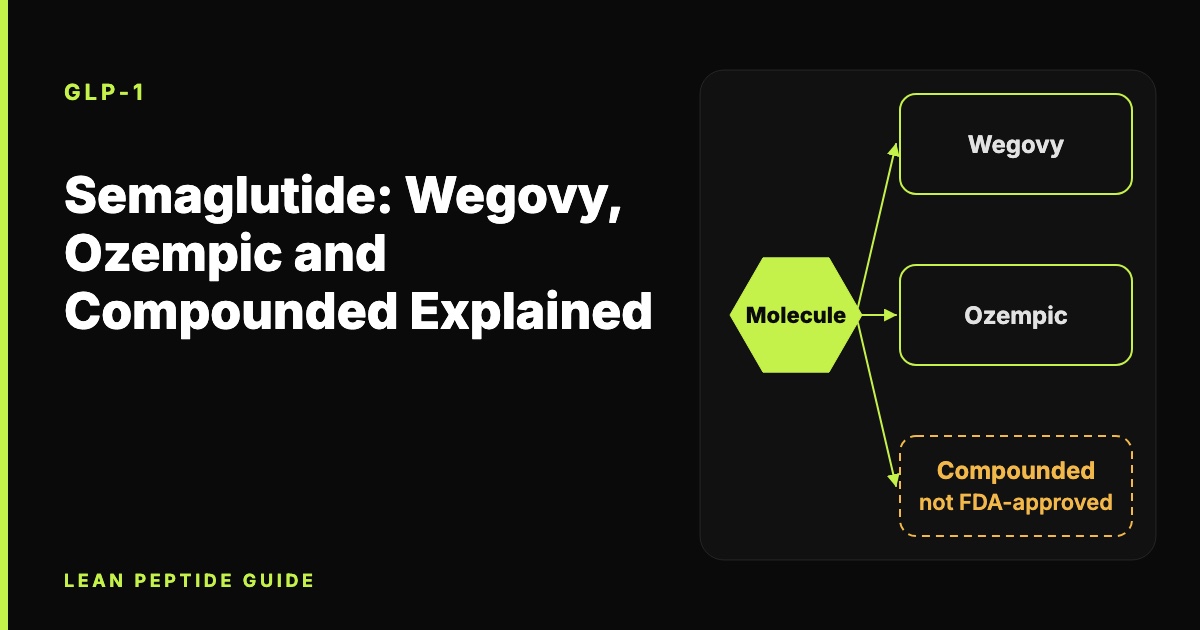
Compounded products sit outside FDA approval. A compounding pharmacy filling an individual prescription is a different thing from a website selling vials, and both are different from the brand drugs. We unpack the distinction in our compounded GLP-1 explainer.
The legitimate prescription routes
There are three, and each starts with a licensed prescriber.
Your own clinician. A primary care doctor, an obesity-medicine specialist or an endocrinologist can prescribe the approved drugs and follow you over time.
Manufacturer programs. Novo Nordisk's NovoCare page describes self-pay options for Wegovy as pill and pen programs, and says eligibility and restrictions apply and the program can change. Lilly's Zepbound page describes its own offerings. We do not quote prices because manufacturers change them; check the pages directly.
Telehealth. Whoosh Wellness is our partner. As stated by Whoosh, you complete a short intake questionnaire of about five minutes, a licensed doctor reviews it individually and prescribes "if appropriate," and medication ships to your door. Whoosh states you pay only if a physician approves, and that completing the intake does not guarantee a prescription. It also says you must be at least 18 and in a state where its services are available.
Whoosh lists compounded tirzepatide and compounded semaglutide. Those are not FDA-approved, and FDA does not verify their safety, effectiveness or quality before marketing. They are not the same as Wegovy or Zepbound. Whoosh does not sell retatrutide, AOD-9604 or 5-Amino-1MQ.
This page contains affiliate links, meaning we may earn a commission from a Whoosh signup, and that arrangement does not shape our reading of the FDA material above. The route below is one option among the three, and it is the only one we have an affiliate arrangement with.
Whether to prescribe anything is a clinical call: a licensed physician decides whether a prescription is appropriate for you.
Questions to ask before you trust any seller
A few checks work for any listing, whatever it calls itself.
Ask who the prescriber is. A legitimate service can name the clinical practice that oversees care. Whoosh's FAQs, for example, name Wasef Health, PC as the practice handling clinical oversight, and the same FAQs name a partner pharmacy in Ohio. Both are as stated by Whoosh.
Ask what the product is. "Semaglutide" can mean the approved brand, a compounded preparation made to a prescription, an unapproved salt form, or an unlabeled research vial. FDA says semaglutide sodium and acetate salt forms are not approved. A seller who cannot say which one it is selling has told you something.
Ask whether anyone follows up. Approved-drug labels expect monitoring, and a seller with no clinical contact after the sale has no mechanism to notice a problem.
Ask what the page says about FDA. Whoosh's home page and product pages say compounded medications are not FDA-approved finished drugs. A page that is silent on the point, or that implies the opposite, deserves more scrutiny.
Gray market versus prescribed
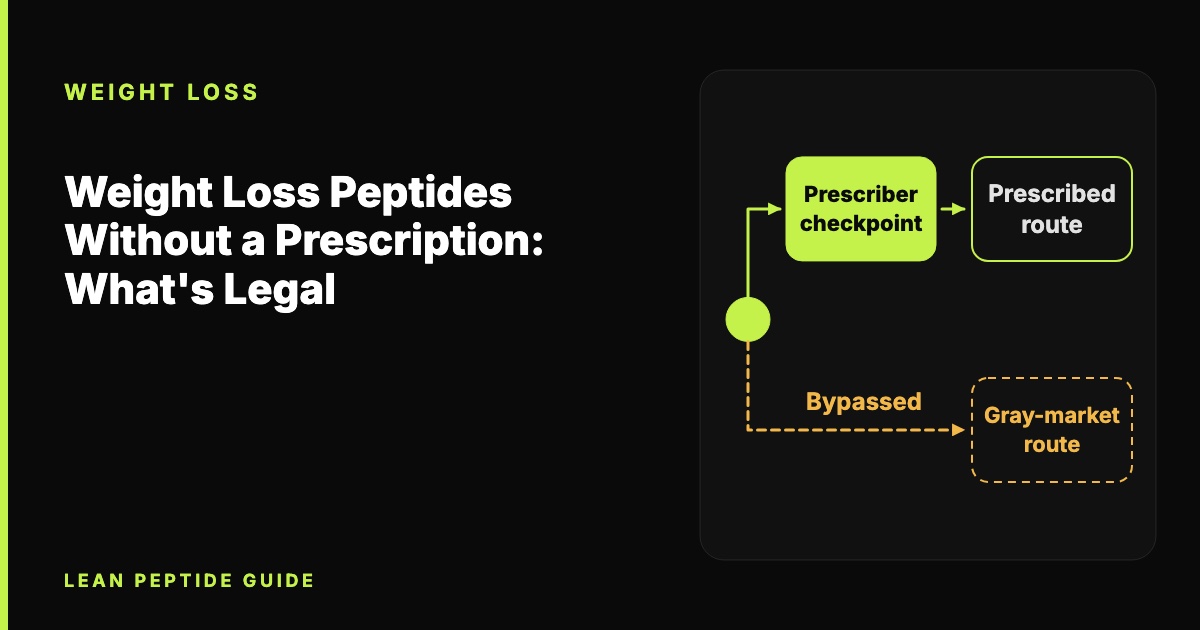
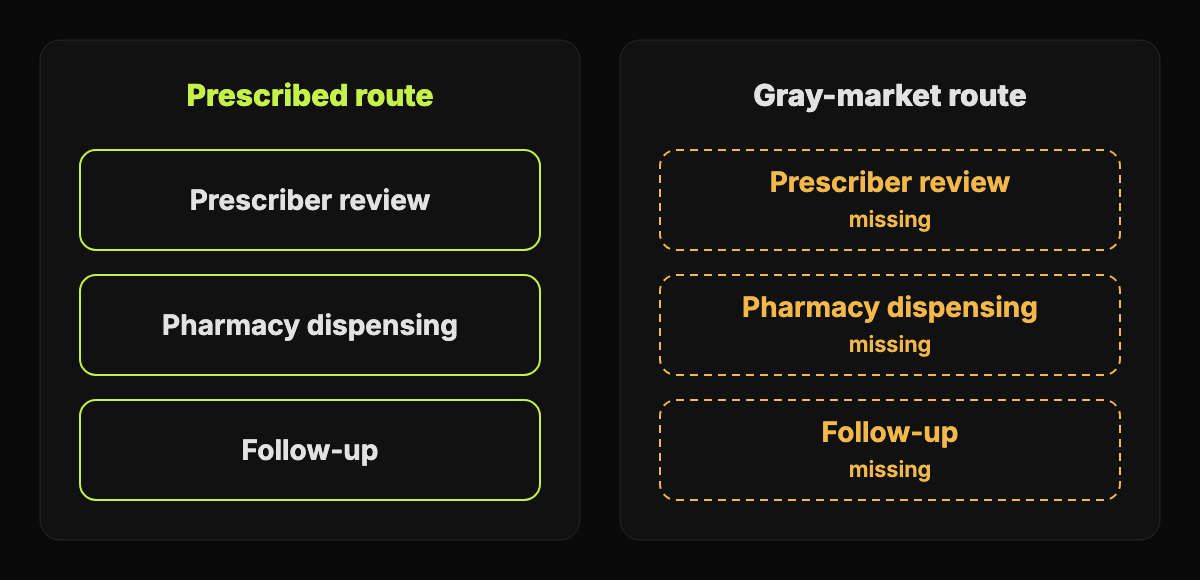
The table sets the two ends side by side. "Gray market" here means products sold outside a prescriber-and-pharmacy relationship, including research-labeled vials.
| Question | Gray market | Prescribed |
|---|---|---|
| Who decides the product is appropriate? | The seller, or you | A licensed physician reviews your intake or history |
| FDA review for safety and effectiveness | None for research-labeled vials; FDA calls them unapproved new drugs | Approved drugs: yes. Compounded drugs: not FDA-approved, not reviewed |
| Who verifies contents? | Often nobody | A pharmacy dispenses against an individual prescription |
| Dose and instructions | Self-directed, often from the seller's guide | Set by the prescriber, labeled by the pharmacy |
| Follow-up | None built in | Check-ins; Whoosh states monthly ones |
| FDA enforcement attention | Warning letters dated 2024-12-10, 2026-03-31, 2026-08-24 | Compounded GLP-1s remain under FDA scrutiny, per its concerns page |
| Who to ask if something goes wrong | The seller, if reachable | The prescriber and pharmacy |
The prescribed column still carries risk. The labels list boxed warnings and real side effects, covered in peptides for weight loss. The difference is that someone is accountable for the product and for your follow-up.
Sources
- NovoCare: Wegovy read 2026-10-06
- Wegovy.com read 2026-10-06
- Lilly: Zepbound read 2026-10-06
- Novo Nordisk: Wegovy tablet approval news read 2026-10-06
- DailyMed: Wegovy injection and tablet label read 2026-10-06
- DailyMed: Rybelsus label read 2026-10-06
- FDA: concerns with unapproved GLP-1 drugs used for weight loss read 2026-10-06
- FDA: avoiding products contaminated with hidden ingredients read 2026-10-06
- FDA: compounding and FDA questions and answers read 2026-10-06
- FDA warning letter: Gram Peptides read 2026-10-06
- FDA warning letter: Summit Research Peptides read 2026-10-06
- FDA warning letter: Peak Performance Peptides read 2026-10-06
- FDA warning letter: Royal Peptides read 2026-10-06
- FDA: tirzepatide shortage resolution memo read 2026-10-06
- FDA: semaglutide shortage resolution memo read 2026-10-06
- FDA: policies for compounders as GLP-1 supply stabilizes read 2026-10-06
- FDA: proposal to exclude semaglutide, tirzepatide and liraglutide from the 503B bulks list read 2026-10-06
- Whoosh Wellness: FAQs, as stated by Whoosh read 2026-10-06
- Whoosh Wellness: terms and conditions read 2026-10-06
- Whoosh Wellness: peptide therapy page read 2026-10-06
FAQ
Can you buy weight loss peptides without a prescription?
You cannot legally buy Wegovy or Zepbound without a prescription, since both are prescription medicines. Products sold without one, such as research-labeled vials, are unapproved, per FDA's warning letters.
Is it legal to buy peptides labeled "for research"?
FDA has stated in a letter dated 2026-03-31 that "research use only" labels do not change that the products are intended as drugs for human use and are unapproved new drugs. We are not lawyers, so ask one about your specific situation.
Is there an over-the-counter GLP-1 pill?
We found no FDA approval of one. The approved tablet is Wegovy's, which is a prescription medicine per Novo Nordisk, approved 2025-12-22.
Do collagen peptides work like semaglutide?
We reviewed no evidence for that and found no FDA statement supporting it. Sharing the word "peptide" tells you only that both are chains of amino acids.
What is the difference between compounded and brand GLP-1s?
Brand drugs are FDA-approved after review. Compounded drugs are not FDA-approved; FDA does not assess them for safety, effectiveness or quality before marketing. See the compounded explainer.
What does an online prescriber actually do?
As stated by Whoosh, a licensed doctor reviews your intake individually and prescribes only "if appropriate." Our Whoosh review covers what the company states about the process.
How do I spot a risky seller?
FDA's listed red flags are prices that look too good to be true, damaged packaging and no oversight by a licensed physician. Dosing instructions on a product labeled "not for human consumption" is another mismatch FDA calls out.
Not medical advice. See the medical disclaimer.