Quick answer: As of 2026-10-06, retatrutide is not FDA-approved for anything. Eli Lilly's 2026-08-05 earnings release says it plans to submit a Biologics License Application to FDA in Q1 2027. Published phase 3 trials report weight reductions in trial participants, but those are research results, not approval. FDA says retatrutide cannot lawfully be compounded, so any vial sold online as retatrutide is an unapproved product.
Search interest in this drug has outrun its regulatory status, and sellers have noticed. This page lays out where the drug actually stands, with dates and sources, and then turns to what to do if you see it offered for sale. Whoosh Wellness, the telehealth partner we cover elsewhere, does not offer retatrutide, which is why this page has no Whoosh button. For what Whoosh does offer in GLP-1s, see the last section. For a general view of approved drugs versus unapproved ones, read peptides vs GLP-1 drugs.
What retatrutide is
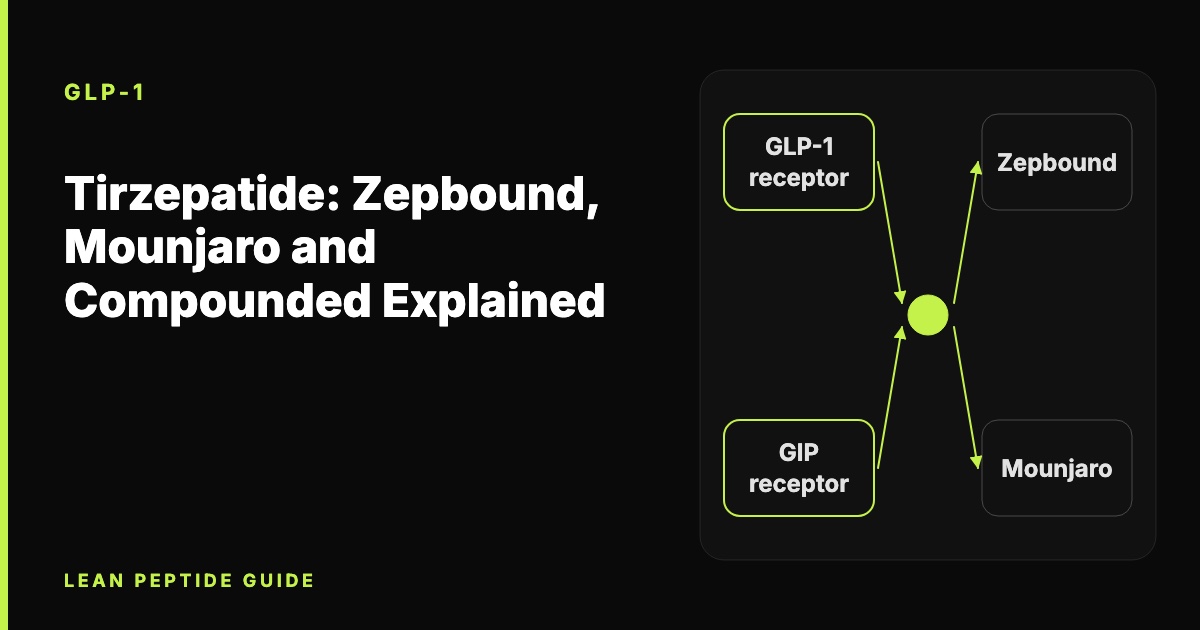
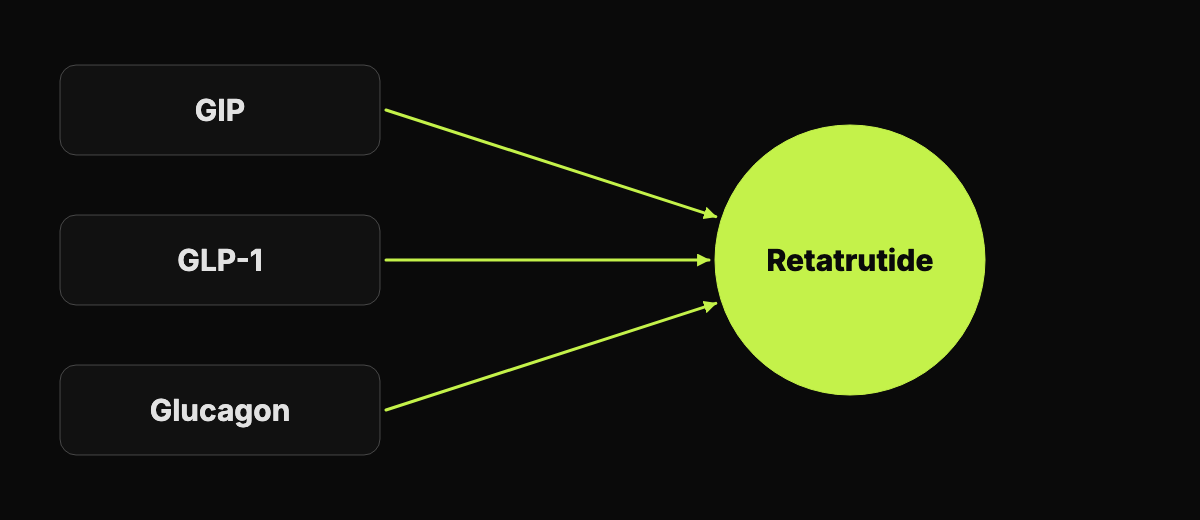
Retatrutide is an investigational drug from Eli Lilly. The abstract of the TRIUMPH-2 report in The Lancet says it acts on three receptors: GIP, GLP-1 and glucagon. Semaglutide acts on GLP-1, and tirzepatide on GIP and GLP-1, so retatrutide is described as adding a third target. Both of those drugs are FDA-approved brands; retatrutide is not. Our comparison of those two is in tirzepatide vs semaglutide.
"Investigational" means it is being tested in trials run by its developer. It does not mean it is available through a prescription, a pharmacy or a research-chemical shop.
Where the FDA process stands
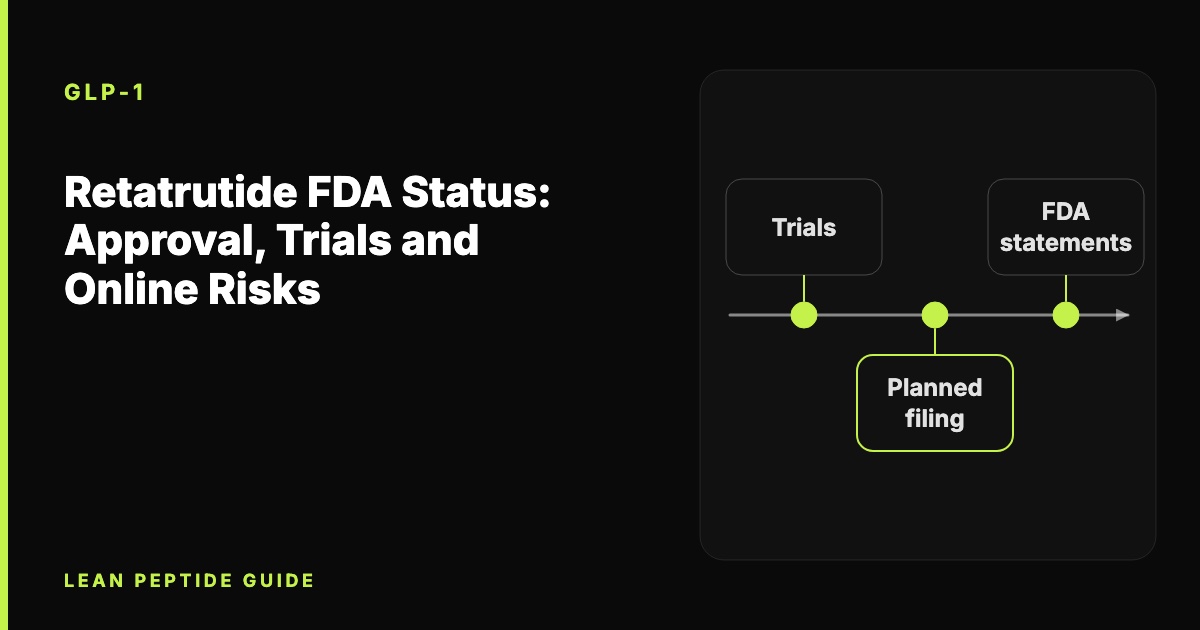
No FDA approval exists for retatrutide. According to Lilly's second-quarter 2026 earnings release, filed with the SEC on 2026-08-05, the clinical data package is complete to support global registrations for obesity, obstructive sleep apnea and knee osteoarthritis pain, and Lilly plans to submit a Biologics License Application to FDA in Q1 2027. BioPharma Dive reported that the plan had previously been the end of 2026, delayed for manufacturing and quality data.
Three things follow from that wording. A planned submission is not a submission. A submission is not an approval. And FDA has not published a decision date, which we could not find anywhere, so any date for approval you read online is a guess. We could not open Lilly's own investor-site press releases, so we rely on the SEC filing and the peer-reviewed papers, not on Lilly's trial announcements.
What the published trials reported
The figures below are from peer-reviewed abstracts, all funded by Lilly, and all describe trial participants, not people using products from online sellers.
TRIUMPH-1 (New England Journal of Medicine, online 2026-09-29). The trial enrolled 2,339 adults with obesity, who received retatrutide 4 mg, 9 mg or 12 mg or placebo weekly for 80 weeks. Mean weight change was -17.6%, -23.7% and -25.0% with the three retatrutide doses, against -3.9% with placebo. Two subgroups were reported separately. In a knee osteoarthritis subgroup of 574 people, pain scores decreased by 3.2 to 3.6 points against 1.9 points with placebo. In a sleep apnea subgroup of 243, apnea-hypopnea events per hour decreased by 22.9 to 34.3 against 9.9. Gastrointestinal effects were the most frequent.
A caution about this number. Secondary summaries of Lilly's announcement report a higher figure for the 12 mg arm than the abstract's -25.0%. A likely reason is a different way of counting participants (everyone randomized, versus those who stayed on the drug), but we could not confirm it because Lilly's release did not open for us. We cite the peer-reviewed abstract and avoid mixing figures from different methods.
TRIUMPH-2 (The Lancet, September 2026). This trial enrolled 1,152 adults with a BMI of 27 or more and type 2 diabetes, at 92 centers in eight countries. At week 80, weight changed by -11.9%, -16.8% and -18.8% across the three doses, against -5.1% with placebo. Diarrhea was reported by 27% to 34% of retatrutide participants against 13% with placebo, and hypotension and dysesthesia were more frequent.
Phase 2 (New England Journal of Medicine, 2023). Jastreboff and colleagues, online 2023-06-26 and in print 2023-08-01, studied 338 adults with obesity on weekly doses of 1 mg to 12 mg or placebo. At 24 weeks the change ranged from -7.2% (1 mg) to -17.5% (12 mg), against -1.6% with placebo. At 48 weeks it ranged from -8.7% to -24.2%, against -2.1%. Gastrointestinal adverse events were dose-dependent, and heart rate rose, peaking at week 24.
Notice what these papers are. They are trials of a drug being given by researchers, under a study protocol, with screening and monitoring. They do not tell you that a vial from a website contains the same molecule, at the stated strength, free of contamination.
Dated, sourced timeline
| Date | Event | Source |
|---|---|---|
| 2023-06-26 | Phase 2 trial published online (print 2023-08-01) | New England Journal of Medicine |
| 2026-08-05 | Lilly's Q2 earnings release says the data package is complete and plans a Biologics License Application in Q1 2027 | Lilly release filed with the SEC |
| 2026-08-24 | FDA warning letter to Royal Peptides LLC describing retatrutide as an unapproved new drug with no approved application | FDA |
| September 2026 | TRIUMPH-2 published | The Lancet |
| 2026-09-29 | TRIUMPH-1 published online | New England Journal of Medicine |
| 2026-10-01 | FDA page on unapproved GLP-1 drugs shows this update date and says retatrutide cannot lawfully be compounded | FDA |
| Q1 2027 | Lilly's stated plan to submit a Biologics License Application | Lilly release filed with the SEC |
| Not announced | FDA decision date | None found |
The last row matters as much as the others. Until FDA announces a decision, the status is "not approved."
What FDA says about retatrutide and compounding
FDA's page "FDA's Concerns with Unapproved GLP-1 Drugs Used for Weight Loss" (updated 2026-10-01) says retatrutide and cagrilintide cannot legally be used in compounding and have no FDA approval for any condition. It adds that unapproved versions are not reviewed for safety, effectiveness or quality. That matters because a common pitch is that a "compounded" pharmacy can supply it. FDA's position is the opposite, and compounded products in general are not FDA-approved. For the compounding background, see compounded GLP-1s explained.
On 2026-08-24, FDA sent a warning letter to Royal Peptides LLC. The letter describes retatrutide as an unapproved new drug with no approved application in effect, and says injectable drugs can pose risks of serious harm. It also describes the company selling diluent water alongside a "peptide guide" and a "calculator." That page did not itself discuss compounding; the compounding statement comes from the concerns page above.
If you see it for sale
This is the section for the moment you meet an ad, a social post or a website listing the drug. The facts above give you a way to read it.
It is not an approved medicine, whatever the page says. Nothing on any label can change that. In a letter dated 2026-03-31 to one seller of such vials, FDA's stated view was that a research-only label does not alter who the product is meant for, so the vials remain unapproved. Wording such as "for research purposes" or "not for human consumption" next to human dosing instructions is exactly what FDA's concerns page lists as a red flag.
It cannot be a legitimate compounded prescription. FDA says retatrutide cannot lawfully be compounded. A pharmacy or clinic offering a compounded version is offering something FDA says the law does not allow.
"Lilly-sourced" and "lab tested" are claims. Lilly has not announced any approved product. A seller who says the vial comes from Lilly, from a clinical-trial supply or from a factory abroad is making a claim you cannot check. A certificate shown on a website is only a picture of a document.
Dosing instructions from a seller are a warning sign. FDA's 2024 alert on compounded semaglutide documented patients drawing several times the intended amount because of mix-ups among mL, mg and units. A seller that supplies its own "guide" for an unapproved injectable is stepping into a role normally held by a prescriber.
General red flags from FDA: unrealistic prices, damaged packaging, or no licensed physician involved. FDA also notes counterfeit Ozempic in the US supply and fraudulent pharmacies with false credentials. Our piece on weight loss peptides without a prescription goes further into the gray market.
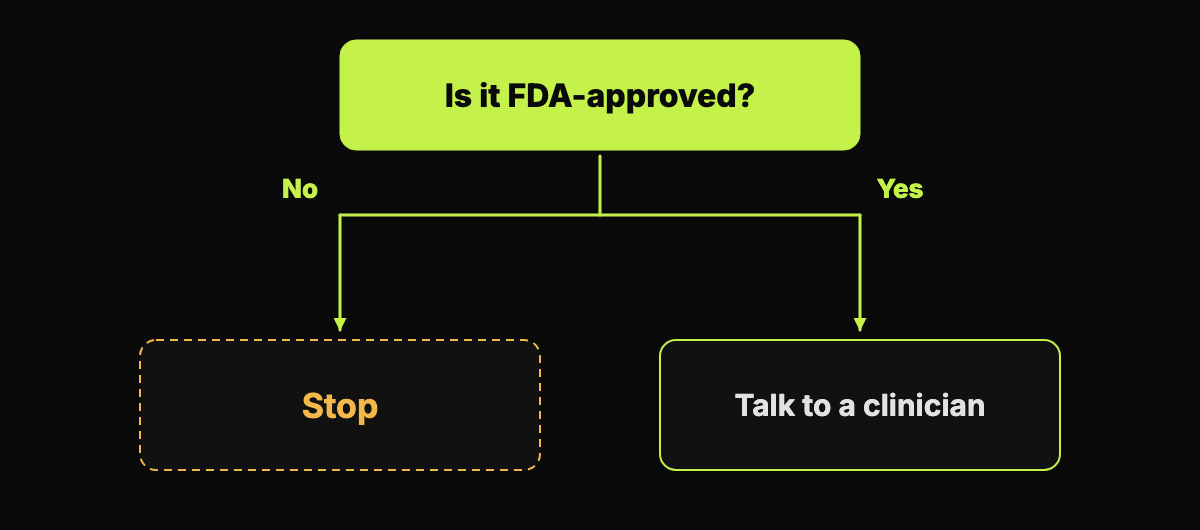
What can you do? You can decline to buy. If you have already used a product and have symptoms, contact a clinician or emergency services.
What to do instead
If your interest is weight management, there are FDA-approved medicines with labels, trial histories and monitoring. Semaglutide (Wegovy) and tirzepatide (Zepbound) are both approved for weight management in the labeled populations. They carry boxed warnings and common digestive side effects, which we describe in our comparison. A clinician can tell you whether either is appropriate, what the alternatives are, and what to do about cost and coverage. If a provider also offers a compounded version, ask the eight questions in our compounding guide, and remember that such products are not FDA-approved.
If your interest is a trial, you can ask a clinician whether you might qualify for a study run through a registered research program; a trial is a supervised setting, not a shop.
What Whoosh offers in GLP-1s
Whoosh does not offer retatrutide. In GLP-1s, Whoosh states that it offers compounded tirzepatide and compounded semaglutide, both not FDA-approved, prescribed only if a licensed physician decides it is appropriate. Whoosh also lists sermorelin, NAD+, glutathione and topical GHK-Cu. This is as stated by Whoosh; see our Whoosh Wellness review.
Sources
- Eli Lilly Q2 2026 earnings release (SEC filing, 2026-08-05) read 2026-10-06
- BioPharma Dive: Lilly retatrutide FDA application timing read 2026-10-06
- TRIUMPH-1 abstract, NEJM 2026 (PMID 42814954), Europe PMC read 2026-10-06
- TRIUMPH-2 abstract, The Lancet 2026 (PMID 42810372), Europe PMC read 2026-10-06
- Phase 2 retatrutide abstract, NEJM 2023 (PMID 37366315), Europe PMC read 2026-10-06
- FDA: concerns with unapproved GLP-1 drugs used for weight loss read 2026-10-06
- FDA warning letter: Royal Peptides LLC, 2026-08-24 read 2026-10-06
- FDA warning letter: Gram Peptides, 2026-03-31 read 2026-10-06
- FDA: alert on dosing errors with compounded semaglutide, 2024-07-26 read 2026-10-06
- Whoosh Wellness peptide therapy page read 2026-10-06
FAQ
Is retatrutide FDA-approved?
No. As of 2026-10-06 it has no FDA approval for any condition. Lilly's 2026-08-05 earnings release says it plans to submit a Biologics License Application in Q1 2027.
When will retatrutide be approved?
No one can say. A submission is planned for Q1 2027, but FDA has not announced a decision date, and a submission is not an approval. Be wary of any site that gives a launch date.
Can a compounding pharmacy make retatrutide?
FDA says retatrutide cannot lawfully be compounded and has no approved application. Compounded products in general are not FDA-approved, and FDA's page lists retatrutide among drugs that cannot be used in compounding.
What did the TRIUMPH trials find?
TRIUMPH-1 reported a mean weight change of -17.6%, -23.7% and -25.0% at 4 mg, 9 mg and 12 mg against -3.9% with placebo at 80 weeks in 2,339 adults with obesity. TRIUMPH-2, in adults with type 2 diabetes, reported -11.9%, -16.8% and -18.8% against -5.1%. These are trial results for a supervised study drug.
Why do some reports give a different TRIUMPH-1 number?
Secondary summaries of Lilly's announcement report a higher figure for the 12 mg arm. We could not open Lilly's release to check the method, so we cite the peer-reviewed abstract.
Is "research use only" retatrutide legal to buy?
FDA has taken the position, in a warning letter, that research-only wording does not change a vial's intended human use. We do not call such products legal or safe.
Does Whoosh sell retatrutide?
No. Whoosh does not offer retatrutide. It states that it offers compounded tirzepatide and compounded semaglutide, both not FDA-approved, among its products.
Not medical advice. See the medical disclaimer.